The Multi-Location Blueprint: How Independent Groups Scale Operations Without Losing Their Local Soul
Discover how successful independent restaurant groups scale from single-unit operations to multi-location enterprises without sacrificing brand identity, guest experience, or local character.

The Multi-Location Blueprint: How Independent Groups Scale Operations Without Losing Their Local Soul
Introduction
Scaling an independent restaurant from a single beloved neighborhood establishment into a thriving multi-unit group is one of the most exhilarating and perilous milestones in hospitality. What begins as a single kitchen driven by the founder's relentless vision, personal touch, and intuitive oversight suddenly confronts the harsh realities of physical distance. When an operator goes from being present on the floor during every single service to managing two, three, or five locations scattered across different neighborhoods or cities, the rules of engagement change entirely.
The core paradox of multi-unit restaurant growth lies in the tension between standardization and localization. On one hand, scaling requires rigorous systems, repeatable processes, and centralized financial control to protect thin profit margins. On the other hand, the very magic that made the original restaurant successful is often its hyper-local character, its deep community roots, and the unmistakable soul poured into every dish and guest interaction. When hospitality groups over-standardize, they risk becoming sterile corporate chains that lose their cultural heartbeat. When they under-standardize, they drown in operational chaos, inconsistent food quality, and runaway labor costs.
In 2026, the independent restaurant groups that successfully navigate this inflection point do not rely on brute force or outdated franchise manuals. Instead, they deploy modern restaurant operations systems, unified cloud data infrastructure, and intelligent automation that handle the back-end complexity while empowering local teams to focus on what matters most: hospitality. This blueprint explores how independent operators can scale their multi-location enterprises without ever losing their local soul.
The 3-Unit Trap: Why Growth Often Kills the Business
Ask any veteran hospitality consultant about the most dangerous phase of restaurant expansion, and they will point directly to the second and third locations. This critical juncture is widely known in the industry as the 3-unit trap. Up until the second location opens, many founders manage to sustain growth through sheer force of will. The owner can still physically visit both restaurants in a single day, jump on the line when a cook calls out, and personally review the daily cash drawer.
However, when the third location opens, the founder's physical capacity reaches its absolute breaking point. The informal communication channels that worked effortlessly in a single restaurant, such as shouting across the kitchen pass or chatting during shift change, completely collapse. Operational problems that were minor annoyances in a single unit become systemic failures across a growing group. A recipe inconsistency between units, a breakdown in inventory ordering, or an unmanaged labor spike in one location can quietly bleed cash and overshadow the profits generated by the flagship store.
Most independent operators fail at scaling because they attempt to replicate a single-location mindset across multiple units. They treat each new restaurant as an isolated island rather than nodes in a connected enterprise. Without standardized data streams, centralized purchasing power, and transparent operational visibility, leadership spends all of their time firefighting rather than executing strategic growth. Recognizing the exact inflection point where manual processes break down is the first step toward building a resilient multi-unit organization.
To understand how to avoid these common operational pitfalls, many growing groups examine the foundational architecture of the modern restaurant technology stack to ensure their digital tools can scale seamlessly across multiple venues.
Infrastructure Layer: Standardize Before You Scale
Before a restaurant group expands its footprint, it must establish a robust infrastructure layer. Scaling without standardization is simply magnifying disorder. However, effective standardization in hospitality does not mean stripping away creativity; it means building a solid operational framework that frees local teams from administrative friction.
The most critical decision in infrastructure design is determining what to centralize and what to keep local. Centralization should govern the foundational business pillars where consistency, compliance, and economy of scale drive profitability. Payroll processing, accounts payable, vendor contract negotiations, brand guidelines, and core accounting must be centralized into a single administrative workflow. By pooling purchasing power across multiple locations, restaurant groups can negotiate better volume pricing with food distributors and equipment suppliers, immediately protecting their bottom line.
Conversely, aspects of the business that directly touch the guest experience and community engagement must remain flexible and localized. Menu item tweaks that cater to neighborhood preferences, local charity partnerships, staff hiring decisions, and floor-level hospitality styles should be guided by local general managers who understand their specific customer base.
At the center of this infrastructure sits technology. A multi-unit restaurant group cannot operate with disparate, disconnected point-of-sale systems in each location. Fragmented software creates data silos that make enterprise-wide financial reporting an agonizing manual chore. Standardizing on a unified cloud-based POS and data management ecosystem ensures that every transaction, inventory adjustment, and labor hour flows into a single source of truth in real time.
Data Layer: One Source of Truth Across Locations
Data is the lifeblood of multi-location restaurant management. When an operator oversees a single unit, intuition and visual inspection can compensate for lack of detailed reporting. The owner knows the walk-in cooler is overstocked because they can see it; they know labor is high because they see too many servers standing around. Across three or five locations, relying on intuition is a recipe for financial disaster.
Siloed POS systems kill multi-unit profitability because they obscure performance discrepancies. Without cross-location analytics, leadership cannot easily answer critical operational questions. Why is Food Cost percentage two points higher at Location B than Location C when both use the same central recipes? Which location is experiencing the highest table turnover rate during Friday dinner service? Which menu items drive the highest gross profit margin across the entire group?
Implementing a centralized data layer transforms how restaurant groups operate. By aggregating sales, inventory, and labor metrics into a unified executive dashboard, multi-unit operators can compare performance across locations instantly. If an anomaly appears, such as a sudden spike in waste at one unit, regional managers can investigate immediately rather than discovering the loss at the end of the month during P and L review.
This data-driven visibility also facilitates the sharing of best practices across the group. When one location discovers an innovative way to reduce prep time or market a seasonal cocktail, that success can be analyzed, codified, and rolled out to all other units. For deeper insights into how predictive metrics drive multi-unit profitability, reviewing advanced analytics strategies provides a clear roadmap for forward-thinking operators.
People Layer: Culture and Leadership
Technology and standardized infrastructure are essential, but a restaurant group is ultimately only as strong as its people. Scaling a restaurant group requires building a scalable leadership pipeline. In a single-unit restaurant, the owner or head chef acts as the primary cultural anchor. In a multi-unit group, that culture must be systematized, taught, and championed by a layer of middle management, specifically regional managers and general managers.
The transition from single-unit general manager to multi-unit regional manager is often fraught with difficulty. Great general managers are obsessive about daily details: table touchpoints, cleanliness, local guest names, and shift-level execution. Regional managers, however, must master a different skill set: macro-level coaching, financial analysis, talent development, and systems auditing. Restaurant groups must invest heavily in leadership development programs to train general managers in supervisory skills before promoting them into multi-unit roles.
Standard operating procedures must be documented clearly without creating a rigid, soul-crushing franchise manual. The goal is to provide guardrails for food safety, recipe execution, and service standards while empowering local leaders to make autonomous decisions that serve their guests. When location managers feel trusted and empowered, their engagement remains high, turnover drops, and the authentic local character of each restaurant is preserved.
Guest Layer: Consistent Experience, Local Feel
Guests who fall in love with an independent restaurant expect a distinct, authentic experience. When that restaurant opens a second or third location, those regular guests fear corporate homogenization. They worry that the soul of the restaurant will be replaced by cookie-cutter menus, standardized decor, and indifferent service.
The ultimate achievement of a successful multi-location scaling strategy is achieving operational consistency behind the scenes while delivering a deeply local feel on the dining room floor. Technology plays a vital role in enabling this balance.
Modern digital branding, automated marketing, and CRM platforms allow restaurant groups to maintain a unified customer database while executing hyper-targeted local campaigns. For instance, a group can run a centralized loyalty program across all locations while allowing individual units to curate neighborhood-specific chalkboard specials, host local wine-maker dinners, or partner with nearby artisan bakeries.
By leveraging automated guest feedback and review monitoring tools, multi-unit operators can track guest sentiment down to the specific table and shift at each location. This rapid feedback loop ensures that if service slips at a newly opened unit, leadership can intervene before online reputation is damaged. For more insights on avoiding common pitfalls during expansion, reviewing operational POS traps provides valuable lessons on maintaining technical integrity.
Technology Stack for Multi-Unit Groups
To execute the multi-location blueprint successfully, independent groups require an integrated technology stack designed specifically for enterprise visibility without enterprise complexity. The modern multi-unit stack must include:
- Unified cloud POS setup: Ensuring real-time menu updates, centralized pricing, and synchronized payment processing across all units.
- Automated labor management: Utilizing AI forecasting to optimize schedules and control labor costs across multiple locations simultaneously.
- Centralized inventory and purchasing: Tracking ingredient usage in real time, automating purchase orders, and consolidating vendor spend.
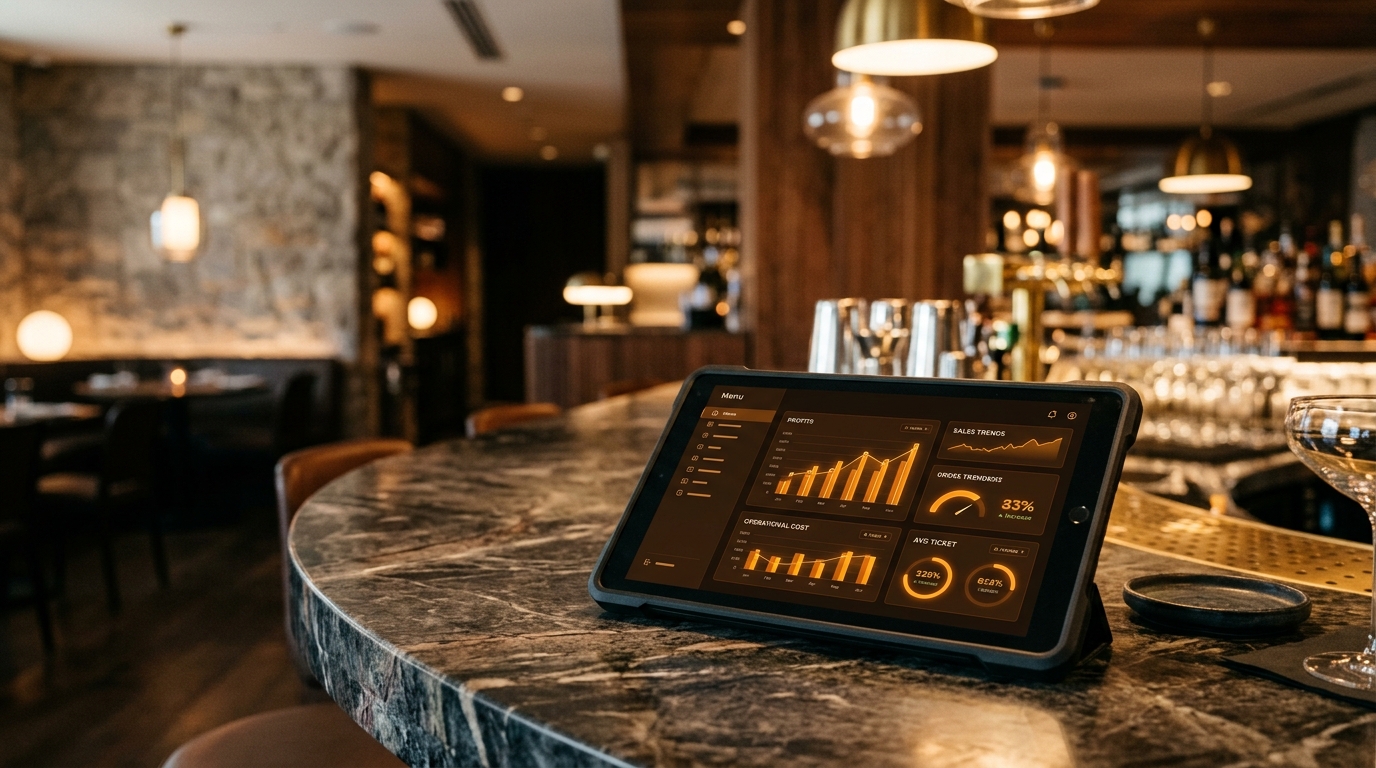
- Cross-location analytics dashboards: Providing executive visibility into sales trends, food costs, and labor percentages from a single screen.
- AI agents for reviews and workflows: Automating customer engagement, review responses, and administrative workflows to free up regional management time.
Partnering with a specialized managed service provider ensures that these complex systems integrate smoothly without requiring the restaurant group to maintain a dedicated internal IT department.
The Kitxens approach bridges this exact gap for growing independent groups. Acting as your IT and POS department in the cloud, Kitxens delivers comprehensive, seamless support across all technical layers, allowing multi-unit operators to scale their footprint with confidence and efficiency.
Conclusion
Scaling an independent restaurant group from one location to many is one of the most rewarding challenges in hospitality. It requires shifting away from manual firefighting and embracing a disciplined infrastructure, a unified data layer, and a scalable leadership culture.
By standardizing the back-end systems that drive efficiency while protecting the local soul that drives hospitality, independent operators can build profitable, resilient multi-unit enterprises. Growth does not have to mean losing your identity; with the right technological blueprint and operational strategy, your restaurant group can scale its reach while keeping its heart intact.
Schedule a multi-location technology audit for your restaurant group today.
Frequently Asked Questions
What is the biggest challenge when scaling an independent restaurant to multiple locations?+
The greatest challenge is the transition from single-unit intuition to multi-unit systems. Founders often hit the 3-unit trap where informal communication breaks down, manual processes fail, and inconsistent food or labor costs eat into profit margins.
How do multi-unit restaurant groups maintain consistency without losing their local feel?+
Successful groups standardize back-end operations such as payroll, purchasing, core accounting, and POS infrastructure, while empowering local general managers and staff to curate neighborhood-specific touches, menu specials, and community engagement.
Why are siloed POS systems dangerous for multi-unit restaurant management?+
Siloed POS systems create data blind spots, making it difficult for leadership to compare performance metrics across locations in real time. Unified cloud-based POS platforms provide a single source of truth for sales, labor, and inventory across the entire enterprise.
What aspects of restaurant operations should be centralized versus kept local?+
Foundational business pillars like accounting, payroll, vendor contract negotiations, and core brand standards should be centralized. Guest-facing elements, hiring, local marketing, and neighborhood community ties should remain localized under the purview of location managers.
How does Kitxens support multi-location restaurant groups?+
Kitxens acts as your IT and POS department in the cloud, providing comprehensive, seamless support for multi-unit POS setup, centralized data analytics, cloud infrastructure, and technical management without the overhead of an internal IT staff.
What technology is essential for managing multi-unit restaurant operations in 2026?+
Essential technology includes unified cloud POS systems, cross-location analytics dashboards, automated labor forecasting and scheduling, centralized inventory tracking, and AI-driven workflow automation to reduce administrative burdens on regional managers.
When should an independent restaurant operator start implementing multi-unit systems?+
Operators should begin implementing standardized infrastructure, unified data tracking, and documented standard operating procedures before opening their second location to ensure smooth, profitable scaling into the multi-unit phase.
Recommended next step
AI Workforce™
Your AI team working 24/7 — calls, reviews, reports and follow-ups without hiring more staff.
Starting from$199/mo
Learn more
Operations & Processes
Eva is the Kitxens operations AI. She writes about running a tighter restaurant — processes, staffing, kitchen flow, checklists and the systems that make service calm instead of chaotic.