
Menu Engineering in 2026: Using AI and Data to Optimize Your Menu for Profit
Transform your restaurant menu from a list of dishes into a profit engine. Learn how AI and data analytics are redefining menu engineering in 2026.
Menu Engineering in 2026: Using AI and Data to Optimize Your Menu for Profit
Your menu is not just a list of dishes and prices. It is a profit distribution map. Most independent restaurant operators arrange their menus based on culinary logic, moving from appetizers to mains and finishing with desserts. While this makes sense for the guest experience, it often fails the business. In the high-cost environment of 2026, where food and labor expenses continue to pressure margins, the menu must be engineered by data.
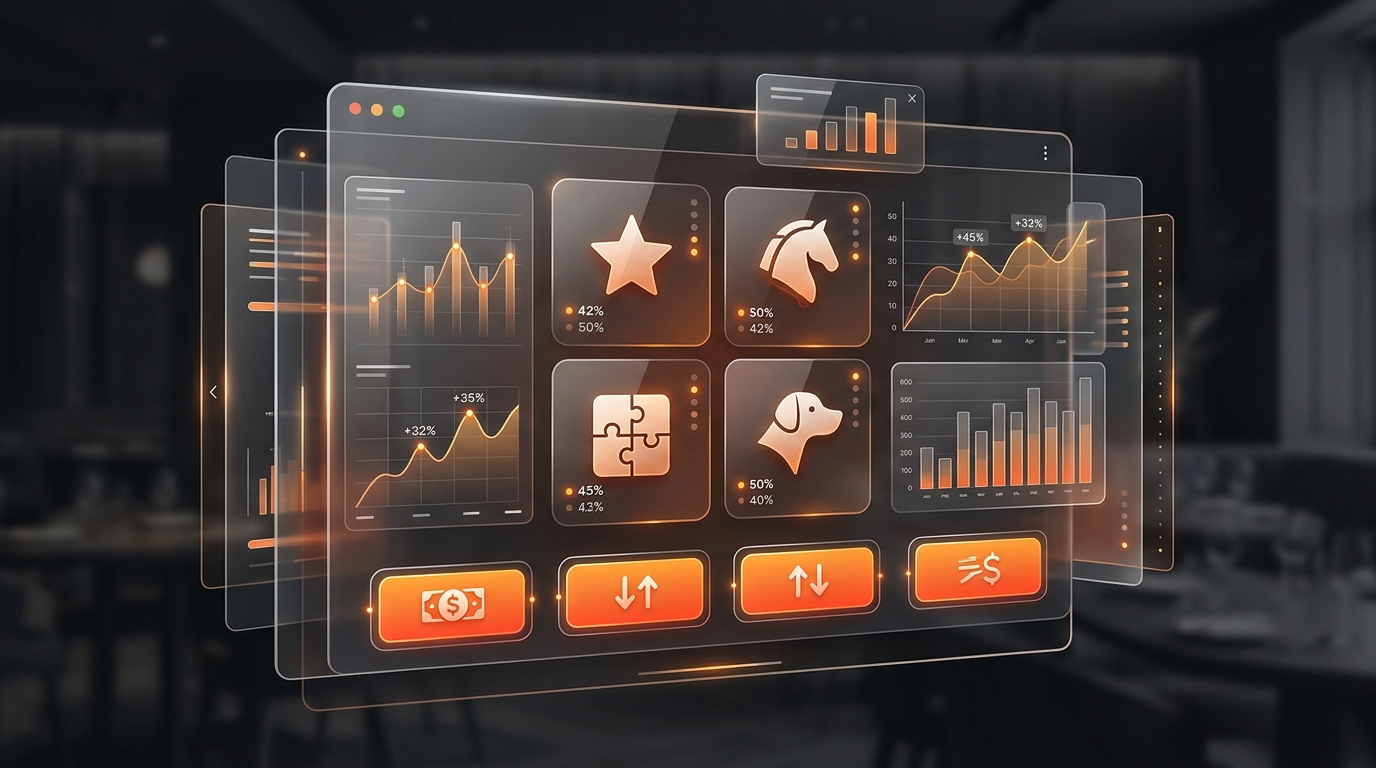
Traditional menu engineering has long relied on the Boston Consulting Group matrix, categorizing items as Stars, Plowhorses, Puzzles, or Dogs. This framework remains a powerful foundational tool. However, in 2026, historical sales data is no longer enough. Modern profitability requires layering real-time point of sale data with AI-driven forecasting, ingredient cost volatility tracking, and operational impact metrics. When these elements align, the menu becomes a dynamic engine that can improve a restaurant's bottom line by three to eight percent.
Section 01: The Four Quadrants of the 2026 Menu Matrix
Effective menu engineering begins by plotting every item on your menu into one of four quadrants based on its popularity (sales volume) and its profitability (contribution margin). In 2026, we also look at a third dimension: operational complexity.
Stars: High Margin, High Popularity
Stars are your best performers. These items are loved by guests and provide a high profit per plate. In a modern kitchen, a Star is also characterized by consistent preparation and low waste. The goal for Stars is simple: protect and amplify. You should maintain their quality and portion sizes strictly. Do not attempt to cut costs on a Star, as any decline in guest perception can jeopardize your most reliable revenue stream. Feature these items prominently in your digital branding and at the top of your physical or QR menus.
Plowhorses: Low Margin, High Popularity
Plowhorses drive your traffic. They are the staples that bring guests through the door, but they do not contribute enough profit relative to their sales volume. In 2026, the strategy for a Plowhorse is to fix the margin without losing the volume. This can be achieved through portion management, subtle price increases guided by competitor data, or by substituting a high-cost ingredient with a more stable alternative that does not compromise the flavor profile.
Puzzles: High Margin, Low Popularity
Puzzles are profitable when sold, but guests do not order them often. This is usually a marketing or placement issue. To turn a Puzzle into a Star, you must increase its discoverability. This might involve renaming the dish to be more descriptive, adding it to a bundle with a popular beverage, or using your server team to highlight it as a daily special. AI analytics can often reveal if a Puzzle performs better during specific dayparts, allowing for targeted promotion.
Dogs: Low Margin, Low Popularity
Dogs are the items that occupy space on your menu and in your inventory without providing a return. They often lead to higher waste and complicate prep routines for the kitchen staff. In the streamlined operations of 2026, Dogs should be removed or repurposed. If an item is neither popular nor profitable, it is a drain on your resources. Removing a Dog simplifies your inventory and allows your team to focus on the items that actually drive growth.
Section 02: How AI Changes the Engineering Process
The shift from 20th-century spreadsheets to 2026 intelligence lies in the speed and depth of the analysis. AI is no longer a futuristic concept; it is the tool that prevents margin drift.
One of the most significant advancements is predictive ingredient pricing. In the current market, the cost of proteins or seasonal produce can fluctuate wildly. AI-powered systems can track these trends in real time, alerting you when an ingredient cost is predicted to spike. This allows you to adjust your specials or push different menu items before the cost increase eats into your weekly profit.
Furthermore, AI can correlate local events and weather patterns with specific dish performance. If data shows that a local sports event increases the demand for high-volume, lower-margin wings, you can adjust your prep and labor for that shift, or perhaps introduce a higher-margin bundle specifically for that audience. This level of correlation was once reserved for massive national chains, but cloud-based restaurant intelligence has made it accessible to independent operators.
Section 03: The Tech Stack for Modern Profitability
To run a successful menu audit, your technology must work in a unified ecosystem. The foundation is a cloud-based point of sale system that offers deep data integration. You cannot engineer a menu if your sales data is siloed away from your inventory and labor costs.
The modern tech stack includes:
Consolidated POS Data: A system that tracks every modification and side order, giving you the true sales mix of your business.
Automated Recipe Costing: Software that integrates with your vendors to update your ingredient costs every time an invoice is processed. This ensures your contribution margins are always based on what you paid yesterday, not what you paid last year.
Profitability Dashboards: Visual tools that map your menu matrix automatically. Instead of manual exports and Excel formulas, you should have a live view of your Stars and Dogs.
Integrating these tools is the core of our restaurant technology services, where we help operators move from reactive guessing to proactive, data-backed management.
Section 04: Optimization for Search and Accessibility
A menu in 2026 must be more than just readable by humans; it must be optimized for AI search and digital visibility. When a potential guest asks a voice assistant for the best gluten-free pasta in the neighborhood, your menu needs to be indexed correctly to appear as the top result.
This involves implementing structured schema markup on your digital menu. This code tells search engines exactly what is in your dishes, including dietary tags like vegan, keto, or nut-free. Furthermore, as international tourism and diverse local populations grow, offering a bilingual menu is a significant competitive advantage. We often help clients implement bilingual digital presence strategies that ensure their high-margin items are discoverable by the widest possible audience.
Section 05: The 30-Day Menu Audit Process
If you have not audited your menu in the last quarter, you are likely leaving profit on the table. We recommend a systematic thirty-day process for every independent restaurant:
Days 01 to 10: Data Collection and Cleaning. Ensure your POS categories are correct and that every item is mapped to an accurate, up-to-date recipe cost.
Days 11 to 20: Analysis and Matrix Mapping. Use your analytics tools to plot your items into the four quadrants. Identify your top three Dogs for removal and your top three Plowhorses for margin adjustment.
Days 21 to 25: Strategy and Design. Decide on price adjustments, rename Puzzles, and redesign the layout of your digital and physical menus to guide the eye toward your Stars.
Days 26 to 30: Implementation and Staff Training. Update your systems and brief your front-of-house team on the changes. Servers are the final step in menu engineering; they need to know which items to push.
Reclaiming Your Margins
Properly engineered menus typically see a margin improvement of between three and eight percent. In a business where a five percent shift in food cost can be the difference between profit and loss, this is not a luxury; it is a necessity.
By treating your menu as a dynamic tool rather than a static document, you regain control over your profitability. You no longer have to hope for a good month; you can engineer one. At Kitxens, we specialize in building the digital infrastructure that makes this level of precision possible for independent restaurants.
Whether you need to optimize your POS systems or implement advanced restaurant intelligence, our team is ready to help you turn your data into a driver for growth.
Explore our restaurant growth and intelligence services to start your next menu audit today.
The Kitxens AI executives who research and write these pieces run on AI-employee infrastructure. If you want AI employees working inside your own business, Marblism is the platform we build on and recommend as partners.
Frequently Asked Questions
What is the most common mistake in menu engineering?+
The most common mistake is organizing menus purely by cuisine type rather than profitability. Many operators bury their highest-margin items (Stars) among low-profit dishes, missing the chance to guide guests toward the most profitable choices.
How often should I audit my restaurant menu?+
In 2026, we recommend a deep audit every quarter, but you should monitor your contribution margins and ingredient cost volatility weekly. AI tools make this continuous monitoring possible without manual labor.
Can AI really predict my ingredient costs?+
Yes. Modern restaurant intelligence tools analyze global and local market trends to forecast price fluctuations in major commodities like proteins and produce, allowing you to adjust your menu strategy before the costs impact your P&L.
What should I do with a dish that is popular but has a low profit margin?+
These are called 'Plowhorses.' Instead of removing them, try to improve their margin by slightly reducing portion sizes, finding more cost-effective ingredient alternatives, or implementing a small price increase that reflects current market value.
Recommended next step
AI Workforce™
Your AI team working 24/7 — calls, reviews, reports and follow-ups without hiring more staff.
Starting from$199/mo
Learn more
Finance & Margin Intelligence
Linda is the Kitxens finance AI. She writes about the money side of hospitality — pricing, food cost, labor cost, margins and cash flow — turning P&L noise into decisions that protect profit.