The Zero-Click Menu: How AI Agents Will Order for Your Guests Before They Arrive
Discover how agentic commerce and zero-click ordering are reshaping the restaurant industry in 2026. Learn how AI agents handle discovery, ordering, and payment on behalf of guests.
The Zero-Click Menu: How AI Agents Will Order for Your Guests Before They Arrive
The interface is disappearing. For decades, the hospitality industry has been defined by the physical or digital surfaces through which a guest interacts with a restaurant. First, it was the paper menu and the physical storefront. Then came the digital revolution: the transition to online ordering websites, third-party delivery apps, and QR code menus. But in 2026, we are witnessing the final stage of this evolution. The interface itself is becoming invisible, replaced by a seamless layer of intelligence that anticipates guest needs and executes transactions with zero clicks.
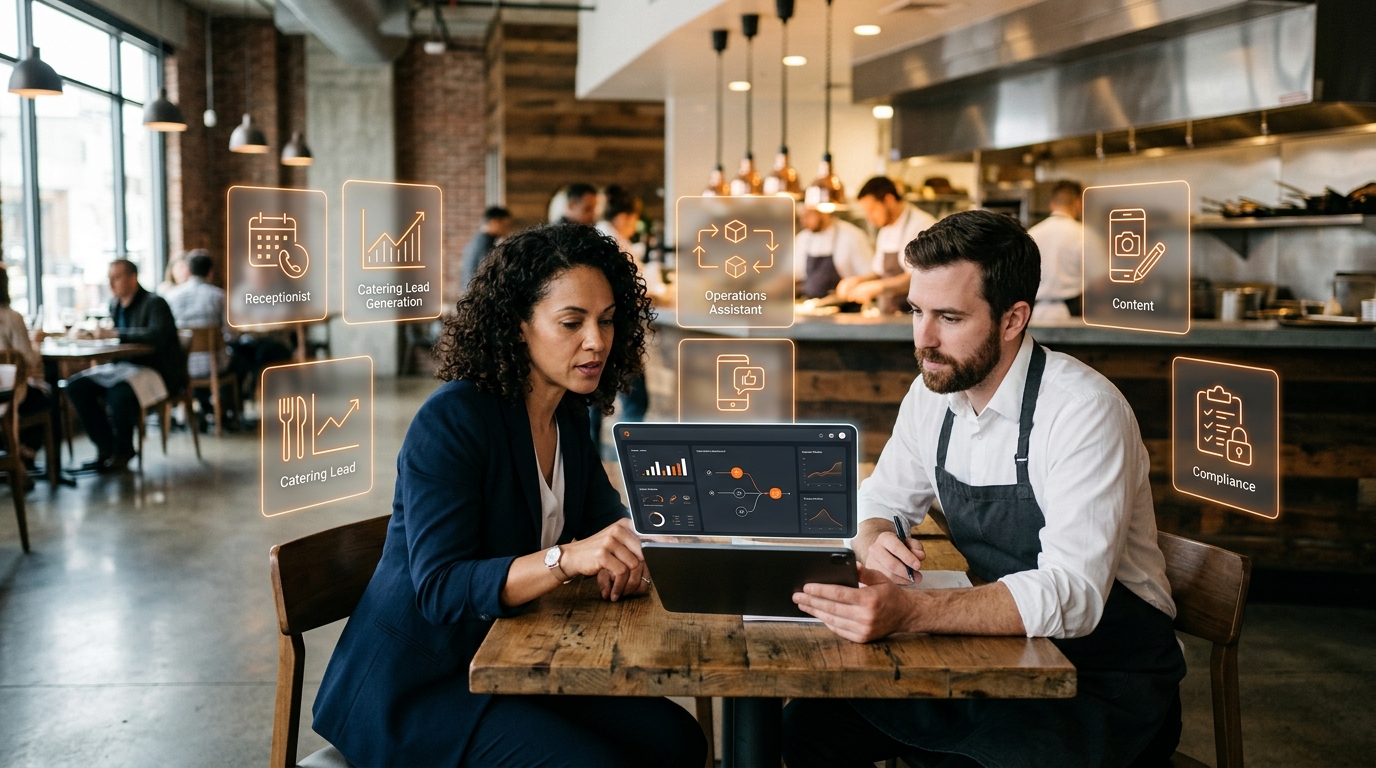
The year 2026 is the year of agentic commerce. This is not merely another step in the automation of the restaurant industry; it is a fundamental shift in how food is discovered, ordered, and consumed. AI agents, sophisticated digital entities like Google Gemini, OpenAI's ChatGPT, and specialized hospitality assistants like Rachel from Kitxens, now handle the entire lifecycle of a transaction. They discover the restaurant, navigate the menu, manage complex modifications, and process payments on behalf of guests. For independent restaurant owners, success is no longer determined by how many people click on their website, but by how effectively their business data can be read and interpreted by these machines.
What Is Zero-Click Ordering
Zero-click ordering is the automation of the discovery and transaction process where AI agents act as personal concierge services for guests. In a traditional ordering flow, even the most optimized digital experience requires a seven-step process: identifying hunger, searching for options, comparing restaurants, navigating a menu, selecting items, entering payment details, and tracking the delivery. Agentic commerce collapses these seven steps into a single, background process.
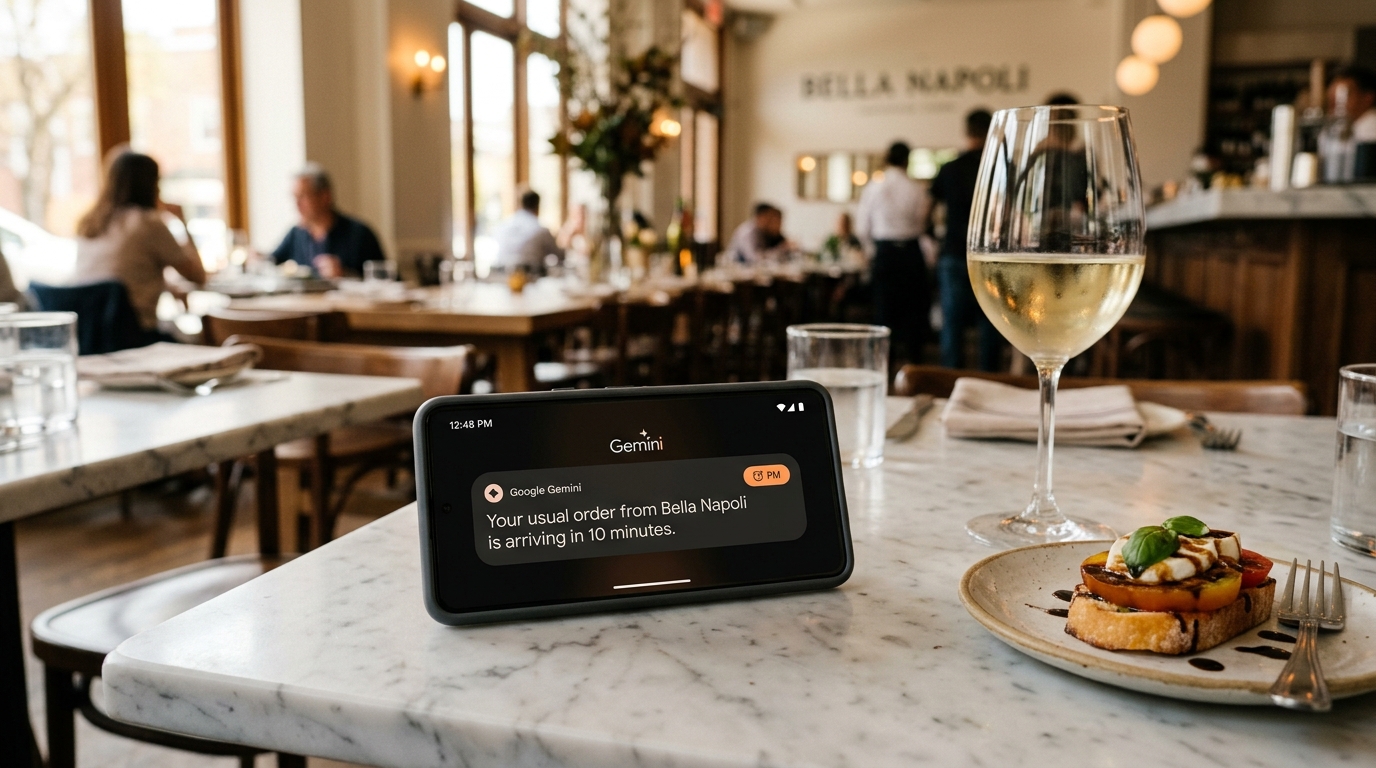
The shift is from reactive fulfillment to proactive fulfillment. In the old model, a restaurant waited for a guest to make a decision and then fulfilled the order. In the zero-click model, the guest's personal AI agent already understands their preferences, dietary restrictions, and schedule. It knows that every Tuesday at 6 PM, after a gym session, the guest prefers a high-protein, low-sodium meal. The agent checks local restaurant inventories, verifies pricing and availability, and places the order automatically. By the time the guest finishes their workout, the food is already being prepared or is en route.
The psychological shift for the consumer is profound. We are moving from a world of I need to order to a world of my food is coming. This eliminates the decision fatigue that has plagued the modern consumer. For the restaurant, it means becoming a node in the guest's daily workflow. The challenge for the independent operator is no longer just being the best cook in the neighborhood; it is being the most accessible and reliable data source for the guest's AI agent.
The Technology Stack Powering Agentic Commerce
The realization of zero-click ordering depends on a sophisticated underlying technology stack that has matured rapidly over the last two years. This stack is built on four pillars: connectivity protocols, predictive analytics, environmental triggers, and secure payment infrastructures.
Model Context Protocol and Direct Integration
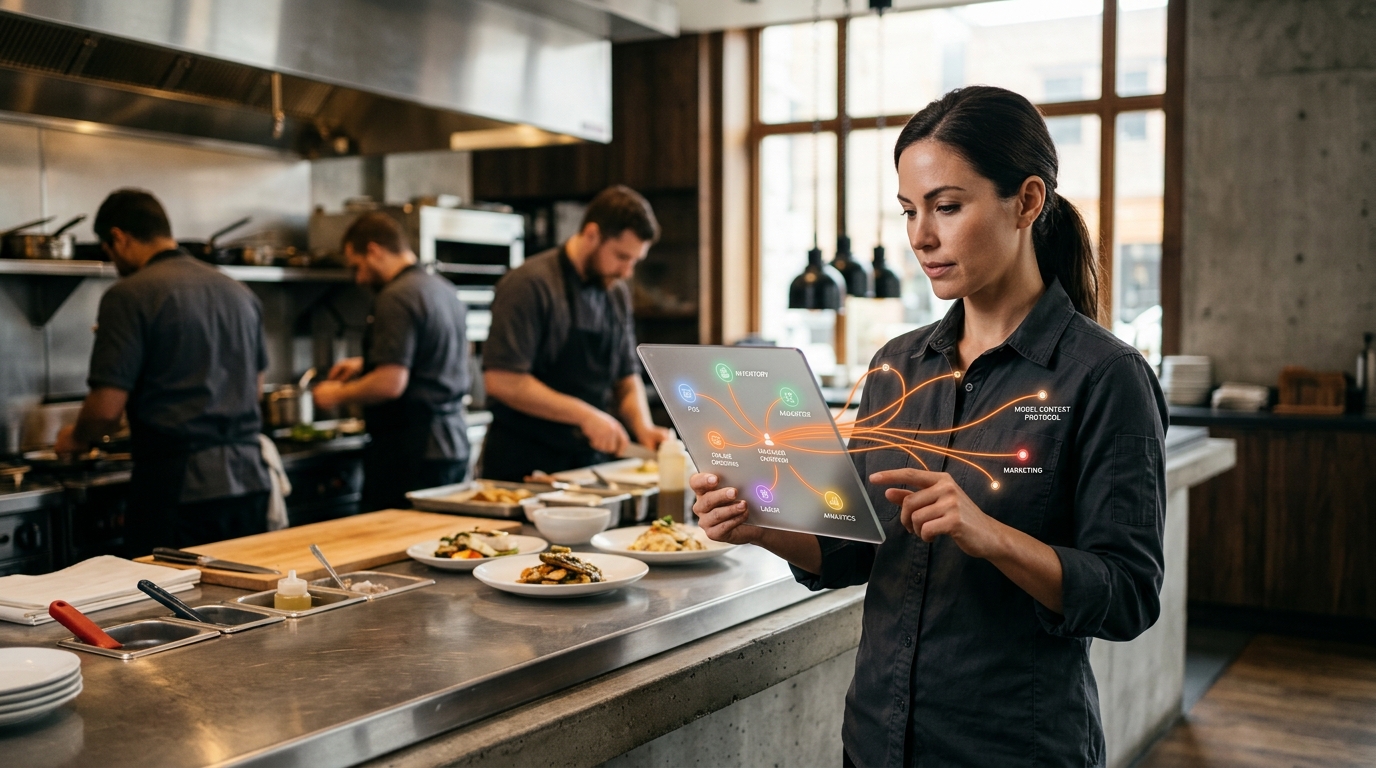
One of the most significant breakthroughs in 2026 is the widespread adoption of the Model Context Protocol (MCP). This protocol allows AI agents to connect directly to restaurant POS backends without the need for middleman apps or proprietary interfaces. In the past, an AI would have to scrape a website to find a menu, which was often inaccurate or outdated. With MCP-style integrations, the AI agent queries the POS in real-time.
This direct line of communication ensures 100 percent accuracy in inventory, pricing, and modifiers. If a restaurant is out of a specific ingredient, the AI agent knows instantly and can suggest an alternative to the guest or choose a different restaurant entirely. For independent operators, this technology levels the playing field. You no longer need a massive engineering team to build a custom app; you simply need a cloud-based POS that speaks the language of modern AI agents.
Predictive Analytics and CRM Data
The second pillar is the integration of predictive analytics with deep CRM data. Modern hospitality CRM systems no longer just store email addresses; they analyze guest behavior patterns, visit frequency, and even emotional sentiment. AI agents use this data to build a comprehensive profile of the guest. By cross-referencing past order history with current calendar events, such as a business meeting or a child's soccer practice, the agent can predict exactly what the guest will want and when they will want it.
GPS and Environmental Triggers
Agentic commerce is highly context-aware. Using geofencing and real-time GPS data, AI agents can trigger orders based on proximity and travel speed. If a guest is driving home and their agent detects they are ten minutes away from their favorite bistro, it can initiate a pickup order so that the food is coming out of the kitchen exactly as the guest pulls into the parking lot. This environmental awareness preserves food quality and eliminates the wait times that often degrade the guest experience.
Tokenized Payments and Biometrics
Finally, the payment layer has become invisible. Through tokenized payment processing and biometric verification, the friction of the checkout screen has been eliminated. Pre-authorized tokens allow AI agents to settle bills securely without the guest ever pulling out a credit card or entering a password. This invisible commerce is the final link in the zero-click chain, turning a complex transaction into a background utility.
The 2026 Landscape: Who Is Doing This Already
While the concept of zero-click ordering may sound futuristic, it is already being deployed at scale by major technology platforms and forward-thinking hospitality groups.
Google Maps Ask Maps to Order
In mid-2026, Google launched its Ask Maps to Order feature, powered by the Gemini AI model. This feature allows users to place complex orders through voice commands while navigating. Because Google already has access to the user's location history, past reviews, and payment information stored in Google Pay, the process is incredibly streamlined. The AI can cross-reference the user's dietary preferences with the structured menu data of restaurants in the area, providing a curated recommendation and executing the order in seconds. This marks a significant move toward the death of the standalone delivery app, as discovery and transaction are unified within the mapping interface.
Square's Agentic Commerce Rollout
Square has also taken a massive leap forward by auto-enrolling over 500,000 food and beverage sellers into its agentic commerce network. Through integrations with ChatGPT and Claude, Square allows customers to discover, browse, and order directly inside an AI conversation. These orders are routed directly to the restaurant's existing Square POS and Kitchen Display System (KDS). Most importantly for the operator, Square has positioned this as a marketplace alternative, offering a 2.9 percent processing fee instead of the 30 percent commission typically charged by third-party delivery platforms.
Brand-Specific AI Agents
Large hospitality groups are no longer waiting for third-party platforms to lead the way. They are deploying their own brand-specific AI agents. These voice-first agents can handle complex modifications with over 95 percent accuracy, far exceeding the performance of traditional online ordering forms. A prime example is Rachel from Kitxens, a specialized AI agent designed for independent restaurants. Rachel handles incoming calls, manages reservations, and processes orders using a natural conversational interface that feels human but operates with machine precision. Managed services like these are making agentic commerce accessible to independent operators who previously felt priced out of the high-tech arms race.
How Independent Operators Can Prepare Right Now
The transition to agentic commerce is not something that will happen in the distant future; it is happening now. Independent restaurants that fail to prepare risk becoming invisible to the AI agents that their guests are beginning to rely on. To stay competitive, operators must follow a structured approach to modernization.
Phase 01: Structured Data Hygiene. The first step is ensuring that your restaurant's data is machine-readable. This means moving away from PDF menus, which are difficult for AI models to parse accurately. Your menu must exist as structured data with clear item names, descriptions, dietary tags, and allergen information. This data must be consistent across all platforms, from your website to your Google Business Profile. Using schema markup is essential for AI indexing, as it provides the context that agents like Gemini and ChatGPT need to understand your offerings.
Phase 02: POS and CRM Integration. Your Point of Sale system is the heart of your agentic commerce strategy. You must use a cloud-based POS with open APIs that can act as a single source of truth for your menu, pricing, and inventory. If your POS does not sync in real-time with your online ordering channels, AI agents will eventually lose trust in your data and stop recommending your restaurant. At Kitxens, we act as the IT department in the cloud, ensuring that these complex integrations are handled seamlessly so that the restaurant owner can focus on the food.
Phase 03: Digital Brand Authority. While AI agents are driven by data, they are also influenced by social signals. They prioritize restaurants with high engagement, positive reviews, and a strong digital footprint. User-generated content, such as photos and videos shared by guests, acts as fuel for the AI's recommendation engine. Investing in digital branding and performance marketing is no longer just about reaching humans; it is about building the authority that tells an AI agent your restaurant is a high-quality choice for its user.
Phase 04: Privacy and Consent Infrastructure. As you collect more guest data to fuel personalization, you must also invest in robust privacy infrastructure. This includes clear opt-in models for data collection and transparency about how AI agents interact with guest information. Complying with modern regulations like CCPA 2.0 and GDPR is not just a legal requirement; it is a way to build the trust necessary for guests to allow AI agents to order on their behalf.
The Economic Impact of Zero-Click Ordering
The shift to zero-click ordering is not just a technological curiosity; it is a fundamental restructuring of restaurant economics. For the first time in a decade, independent restaurants have a path toward recovering the margins that were eroded by third-party delivery marketplaces.
The most immediate impact is the elimination of the 30 percent delivery commission. By bypassing the traditional marketplaces and receiving orders directly through AI agents, restaurants can keep a much larger share of every dollar earned. For a restaurant doing 60,000 dollars a month in delivery and takeout, this can mean a recovery of 10,000 to 15,000 dollars in monthly profit. This margin recovery is life-changing for independent operators who have been struggling with rising labor and food costs.
Furthermore, AI agents are proving to be master upsellers. Unlike a busy staff member or a static online form, an AI agent can provide highly personalized suggestions based on the guest's past behavior and current context. If the agent knows the guest usually orders a side of truffle fries but has not done so in their last three visits, it can offer a subtle reminder or a special promotion. This data-driven upselling leads to higher check sizes without any additional effort from the restaurant staff.
Finally, agentic commerce reduces the administrative labor burden on the restaurant. When orders flow directly from an AI agent into the POS and KDS, staff members no longer need to spend their time answering phones, managing multiple delivery tablets, or manually entering orders. This allows the team to focus on in-person hospitality and kitchen efficiency, leading to a better experience for the guests who are actually in the dining room.
The Privacy and Trust Dimension
As we move toward a world where AI agents handle financial transactions and personal preferences, the issues of privacy and trust become paramount. Independent restaurants must be leaders in this conversation to ensure their guests feel secure.
The guest-agent relationship must be built on an opt-in model. Guests should have explicit control over what data they share, including their location, calendar, and payment methods. The value exchange must be clear: the guest provides data in exchange for unprecedented convenience and personalization. If the restaurant or the AI platform violates this trust, the relationship will be severed instantly.
At Kitxens, we advocate for a siloed data architecture. Guest information should be used to improve the experience within a specific restaurant or group, but it should never be used to train public AI models or shared with third-party data brokers. This commitment to data security is what will allow agentic commerce to scale. Guests must know that their dietary preferences and payment details are encrypted and protected by the same rigorous standards as a bank or a hospital.
The Future of the Guest-Agent Relationship
We are standing at the beginning of a new era in hospitality. The journey from click-to-order to ask-to-order, and eventually to no-action-needed, is a natural progression of technology serving human needs. By 2027, the concept of a guest spending ten minutes scrolling through a delivery app will seem as antiquated as calling a restaurant to hear a list of the daily specials over the phone.
The restaurant of the future is a node in a guest's daily workflow. It is an essential service that integrates seamlessly into their life, powered by data and orchestrated by intelligence. But amidst all this technology, the core of hospitality remains the same: the physical experience of a great meal. By automating the digital administration of the business, we are actually freeing restaurants to return to what they do best.
The role of Kitxens is to bridge the gap between the traditional kitchen and the agentic future. We provide the infrastructure, the expertise, and the specialized AI agents like Rachel to ensure that independent restaurants are not just spectators in this revolution, but active participants and beneficiaries. The zero-click menu is not a threat to the independent operator; it is the ultimate tool for growth and profitability in a digital-first world.
Schedule a free technology and privacy audit for your restaurant today.
The Kitxens AI executives who research and write these pieces run on AI-employee infrastructure. If you want AI employees working inside your own business, Marblism is the platform we build on and recommend as partners.
Frequently Asked Questions
What is agentic commerce in a restaurant context?+
Agentic commerce refers to the use of AI agents that can perform tasks and transactions on behalf of a guest. In 2026, this means an AI can discover a restaurant, build an order based on guest preferences, and process the payment without the guest ever having to click a button or navigate an app.
Do I need a specific POS system to enable zero-click ordering?+
To participate in agentic commerce, your restaurant needs a cloud-based POS with open APIs that can communicate with modern AI protocols like MCP (Model Context Protocol). Systems like Square, Toast, and Clover are currently leading the way in these integrations.
Will zero-click ordering replace my existing restaurant website?+
No, your website remains essential, but its role changes. It becomes a structured data source for AI agents. Instead of just being for humans to read, it must be optimized with schema markup so AI agents can accurately index your menu and availability.
How does agentic commerce save me money on delivery fees?+
Traditional delivery apps charge high commissions (up to 30%). In the agentic commerce model, the guest's AI assistant talks directly to your POS through standard protocols, bypassing the marketplace middleman and significantly reducing transaction costs.
Is guest data safe when AI agents are placing orders?+
Security is a top priority in 2026. Transactions use tokenized payments and biometric verification. At Kitxens, we ensure that restaurant data is siloed and encrypted, following a RAG (Retrieval-Augmented Generation) architecture so that sensitive guest info is never shared with public AI training sets.
How does this shift affect my front-of-house staffing?+
Zero-click ordering reduces the administrative burden of order entry and phone management. This allows your staff to focus entirely on in-person hospitality and kitchen quality, improving the experience for guests who are dining in your restaurant.
How can Kitxens help me prepare for agentic commerce?+
Kitxens acts as your 'IT & POS Department in the Cloud.' We handle the complex technical work of structuring your menu data, integrating your POS with AI channels, and deploying specialized agents like Rachel to ensure your restaurant is visible and accessible to the next generation of diners.
Recommended next step
AI Workforce™
Your AI team working 24/7 — calls, reviews, reports and follow-ups without hiring more staff.
Starting from$199/mo
Learn more
Social, SEO & Customer Acquisition
Sonny is the Kitxens acquisition AI. He writes about winning guests where they actually search — social media, SEO, GEO, SEM and Google Business — and turns every Magazine piece into the right format for LinkedIn, Newsletter and partner channels.